
Fire Alarm Systems in Nepal: Types, Working Principles, Benefits, and How to Choose the Right System
A fire can start from something as small as faulty electrical wiring, an overheated appliance, or an unattended cooking area. While fire extinguishers help control fires, detecting a fire at its earliest stage is equally important.
In residential buildings, offices, schools, hospitals, hotels, and industrial facilities across Nepal, fire alarm systems play an essential role in protecting people and property. They provide early warnings that allow occupants to respond quickly, evacuate safely, and take appropriate action before a fire spreads.
However, many property owners focus only on installing fire extinguishers and overlook the importance of having a reliable fire detection and alarm system.
Sabal Suppliers offers fire safety equipment, including fire alarm panels, to help businesses and property owners improve their fire protection arrangements.
In this guide, we will explain how fire alarm systems work, their major components, different types, and what you should consider before choosing one for your building.
1. What Is a Fire Alarm System?
A fire alarm system is a safety arrangement designed to detect signs of fire and alert people inside a building through audible or visual warnings.
Depending on the system, it can detect smoke, heat, or other indicators of a potential fire and communicate the information to a central control panel.
When a fire-related signal is detected, the system activates an alarm to notify occupants so they can respond immediately.
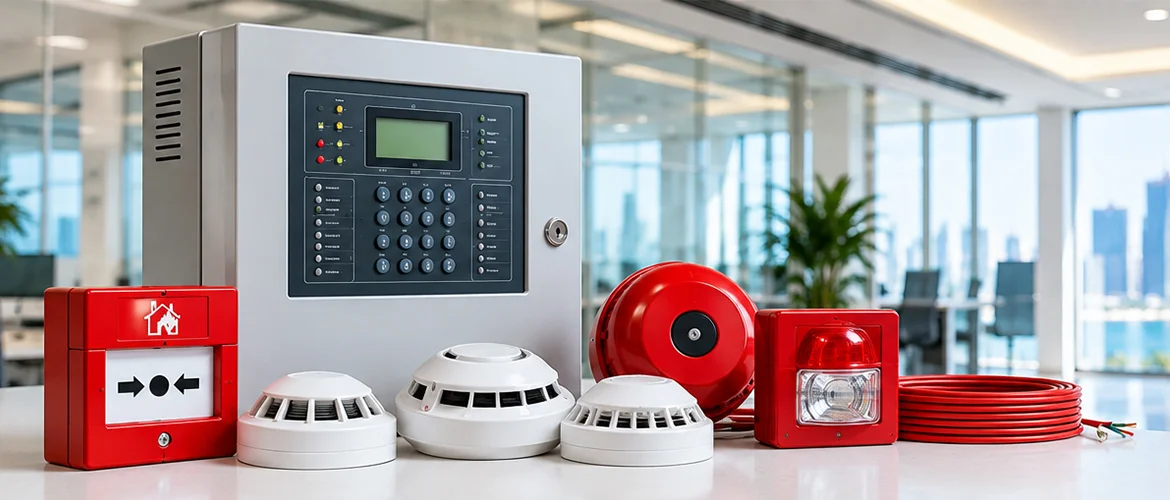
A typical fire alarm system consists of:
- Fire Alarm Control Panel: The central unit that receives signals from connected detection devices and manages the alarm system.
- Smoke Detectors: Devices designed to identify smoke particles in the surrounding environment.
- Heat Detectors: Devices that respond to a specified temperature or rapid temperature increase.
- Manual Call Points: Devices that allow people to manually activate the fire alarm when they notice a fire.
- Alarm Bells and Sounders: Components that produce audible warnings to alert people inside the building.
The combination of these components helps create an effective fire detection and warning arrangement.
2. How Does a Fire Alarm System Work?
Understanding how a fire alarm system operates helps property owners recognize its importance.
Most conventional fire alarm systems follow a straightforward process:
- Detection: A smoke detector, heat detector, or other connected device identifies a possible fire condition.
- Signal Transmission: The detecting device sends a signal to the fire alarm control panel.
- Signal Processing: The control panel receives and processes the signal to identify the affected zone or connected device.
- Alarm Activation: The system activates connected alarm bells or sounders to notify occupants.
- Emergency Response: Occupants follow the building's emergency procedures and evacuate when necessary.
For example, imagine a fire starting in an office storage room. If a connected detector identifies smoke, the control panel receives the signal and activates the alarm.
People inside the building can then respond without waiting for someone to notice the fire visually.
Important: A fire alarm system provides an early warning. It does not replace fire extinguishers, evacuation procedures, emergency exits, or professional firefighting services.
3. Different Types of Fire Alarm Systems
Not every building requires the same type of fire alarm system. The appropriate choice depends on the building's size, layout, occupancy, and fire-risk assessment.
Here are some commonly used fire alarm system types:
1. Conventional Fire Alarm Systems
Conventional fire alarm systems divide a building into different detection zones.
When a detector activates, the control panel identifies the zone where the alarm originated rather than necessarily identifying the exact detector.
These systems are commonly considered for smaller buildings and relatively straightforward layouts.
2. Addressable Fire Alarm Systems
Addressable fire alarm systems assign individual identification addresses to connected devices.
When an alarm occurs, the control panel can identify the specific device sending the signal, helping emergency responders and building managers locate the affected area more accurately.
They are often suitable for larger or more complex buildings where detailed identification is important.
3. Wireless Fire Alarm Systems
Wireless fire alarm systems communicate through wireless connections rather than relying entirely on conventional signal wiring.
They can be useful in certain buildings where installing new cables is difficult or where minimizing structural changes is important.
However, wireless coverage, battery condition, interference, and compatibility must be considered during installation.
4. Hybrid Fire Alarm Systems
Hybrid systems combine wired and wireless components.
They offer flexibility for buildings that require a combination of conventional wiring and wireless connections.
The final selection should always be based on the building's requirements and the recommendations of a qualified fire safety professional.
4. Understanding Fire Alarm Panel Zones
One important factor when selecting a conventional fire alarm panel is the number of zones it supports.
A zone represents a designated section of a building monitored by the fire alarm system.
For example, a building may divide its detection areas into:
- Ground floor.
- First floor.
- Second floor.
- Storage or warehouse area.
Each area can be assigned to a separate zone depending on the panel configuration and system design.
Fire alarm panels are available in different zone capacities, including:
- 2-Zone Fire Alarm Panel: Suitable for smaller layouts with limited detection zones.
- 4-Zone Fire Alarm Panel: Offers additional zone separation for moderately sized layouts.
- 6-Zone Fire Alarm Panel: Provides more flexibility for buildings with several detection areas.
- 8-Zone Fire Alarm Panel: Can accommodate more detection zones for larger or more complex layouts.
However, the number of zones alone does not determine whether a panel is suitable.
The number of detectors, device compatibility, wiring requirements, building layout, and future expansion requirements should also be considered.
At Sabal Suppliers, customers can explore different fire alarm panel options, including 2-zone, 4-zone, 6-zone, and 8-zone models.
5. Where Should You Install a Fire Alarm System?
Proper installation and detector placement are essential for effective fire detection.
Different areas of a building may require different detector types depending on their environmental conditions and potential fire hazards.
Here are some common locations where fire detection systems may be required:
- Residential Buildings: Bedrooms, living areas, corridors, and other appropriate locations.
- Commercial Offices: Workspaces, meeting rooms, electrical areas, and corridors.
- Schools and Colleges: Classrooms, laboratories, libraries, and common areas.
- Hotels and Restaurants: Guest accommodation areas, corridors, kitchens, and service areas.
- Warehouses: Storage sections, loading areas, and other locations identified through risk assessment.
- Hospitals and Healthcare Facilities: Patient areas, corridors, service rooms, and other designated locations.
Remember: Detector placement should follow the manufacturer's instructions and applicable fire safety standards. Kitchens, bathrooms, dusty areas, and other environments may require special consideration to reduce unwanted alarms.
6. Benefits of Installing a Fire Alarm System
Installing a fire alarm system is not simply about meeting safety expectations. It is an important investment in protecting people, property, and business operations.
Here are some major benefits:
- Early Fire Detection
A fire alarm system can identify signs of a potential fire before the situation becomes more serious, allowing people to respond sooner.
- Improved Occupant Safety
Audible and visual warnings help alert people who may not be aware that a fire has started.
- Protection of Property
Early warnings can help reduce the time between fire detection and emergency response, potentially limiting property damage.
- Better Emergency Preparedness
A properly installed system supports organized evacuation procedures and fire safety planning.
- Increased Confidence for Businesses
Having suitable fire detection equipment demonstrates that a business takes workplace safety and property protection seriously.
7. Fire Alarm System Maintenance: What Should You Check?
Installing a fire alarm system is only the beginning. Regular inspection and maintenance are necessary to ensure that it remains operational.
Here are some important maintenance practices:
- Inspect the Control Panel: Check for fault indicators, warning lights, and unusual display messages.
- Test Detection Devices: Arrange periodic testing of smoke detectors, heat detectors, and other connected devices.
- Check Alarm Sounders: Ensure that alarm bells and sounders operate correctly.
- Inspect Wiring and Connections: Look for loose connections, damaged cables, or other visible problems.
- Check Backup Power: Ensure that backup batteries and charging arrangements are functioning according to the manufacturer's specifications.
- Maintain Inspection Records: Keep records of testing, maintenance, repairs, and identified faults.
- Arrange Professional Servicing: Have the system inspected and maintained by qualified technicians at the recommended intervals.
Important: Never ignore a fire alarm panel fault or disable a detector simply because it produces unwanted alarms. Identify the cause and arrange appropriate corrective action.
8. How to Choose the Right Fire Alarm System for Your Building
Selecting the right fire alarm system requires more than simply comparing prices or choosing a panel with more zones.
Before purchasing, consider the following factors:
- Building Size: Understand the total area and number of floors that require protection.
- Number of Detection Zones: Determine how many separate areas need to be monitored.
- Type of Occupancy: Residential, commercial, educational, and industrial buildings may have different fire protection requirements.
- Detector Compatibility: Ensure that the selected panel supports the detectors and other devices required for your system.
- Future Expansion: Consider whether additional detection zones or devices may be required later.
- Installation and Maintenance: Check the availability of professional installation, testing, servicing, and replacement components.
- Applicable Safety Standards: Ensure the proposed system meets relevant building requirements and recognized fire safety standards.
Choosing a suitable fire alarm system from the beginning can help avoid unnecessary replacement costs and improve long-term safety.
Final Thoughts: Don't Wait for a Fire to Think About Fire Detection
Fire safety begins with preparation, and early detection is one of its most important elements.
Whether you manage a school in Kathmandu, a hotel in Pokhara, a warehouse in Birgunj, or a commercial building in Lalitpur, having a properly designed fire alarm system can make a significant difference during an emergency.
A reliable fire alarm panel, compatible detection devices, regular maintenance, and proper emergency planning work together to create a safer environment.
Sabal Suppliers is committed to providing fire safety equipment to help residential and commercial customers make informed decisions about their protection requirements.
Protect Your Building with Reliable Fire Alarm Systems
Don't wait until an emergency exposes the weaknesses in your fire safety arrangements.
Contact Sabal Suppliers today to explore our range of fire alarm panels and discuss the right fire detection equipment for your building.
Visit our website to explore available products and find suitable fire safety solutions for your requirements.
Detect Early. Respond Quickly. Stay Protected.